Major League Baseball (MLB) is one of the most iconic and historic professional sports leagues in the world. Known as America’s national pastime, MLB has captivated generations of fans with its rich traditions, legendary players, and unforgettable moments. From thrilling World Series championships to record-breaking individual performances, Major League Baseball continues to play a major role in global sports culture.
With millions of passionate fans, billion-dollar franchises, and a growing international presence, Major League Baseball remains one of the most influential professional sports organizations worldwide. This article explores MLB’s history, structure, teams, star players, business impact, and what makes it one of the most beloved sports leagues in history.
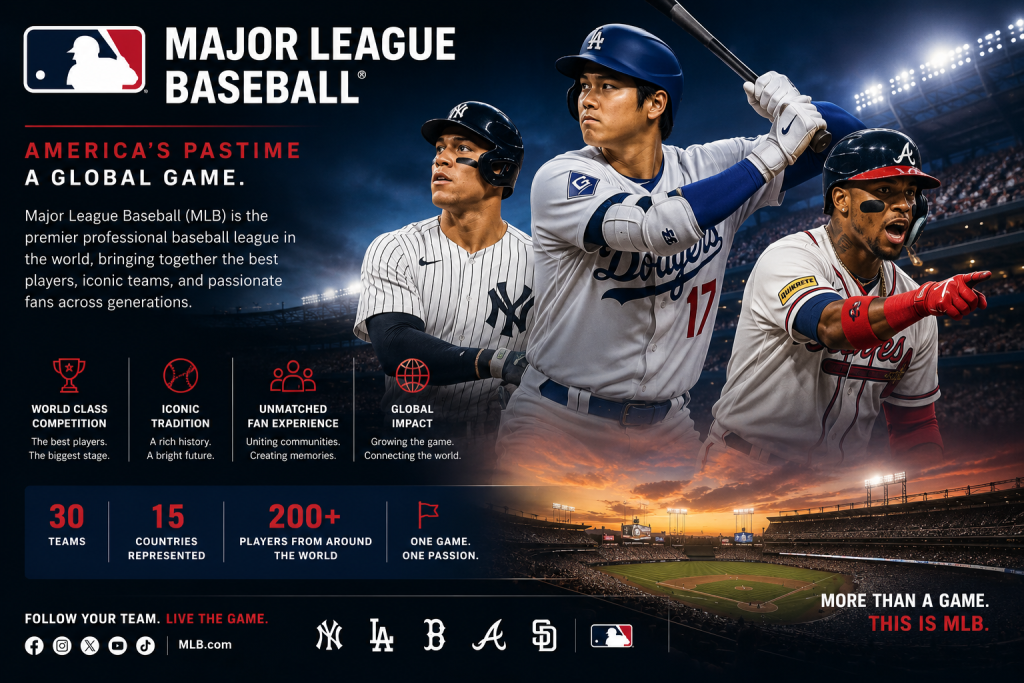
What Is Major League Baseball?
Major League Baseball (MLB) is the highest level of professional baseball in United States and Canada. The league consists of 30 professional teams, divided equally between the American League (AL) and the National League (NL).
Founded officially in 1903 through the cooperation of the American and National Leagues, MLB has grown into one of the world’s most valuable sports leagues.
Each MLB season includes:
- Spring Training
- 162 regular-season games
- Postseason playoffs
- The World Series championship
The league attracts millions of spectators annually and reaches global audiences through television, digital streaming, and social media.
History of Major League Baseball
The roots of professional baseball date back to the 19th century. The National League was established in 1876, making it the oldest major professional sports league in the United States.
The American League followed in 1901, and in 1903, the first modern World Series was played between champions from both leagues.
Throughout history, MLB has witnessed transformative moments, including:
- The breaking of baseball’s color barrier by Jackie Robinson in 1947
- The home run dominance of Babe Ruth
- The pitching excellence of Sandy Koufax
- Record-setting achievements by Hank Aaron and Derek Jeter
These moments helped shape baseball into a defining part of American culture.
MLB Teams and League Structure
Major League Baseball consists of 30 teams, divided into six divisions across two leagues.
American League Teams
Popular American League franchises include:
- New York Yankees
- Boston Red Sox
- Houston Astros
- Toronto Blue Jays
National League Teams
Top National League teams include:
- Los Angeles Dodgers
- Chicago Cubs
- Atlanta Braves
- Philadelphia Phillies
Each team competes during the regular season to qualify for postseason play and ultimately compete for the World Series title.
Why Major League Baseball Is So Popular
Rich Tradition and History
Few sports leagues can match MLB’s historical significance. Baseball traditions such as opening day, the seventh-inning stretch, and the World Series have become deeply embedded in American culture.
Legendary Players
MLB has produced some of the most famous athletes in sports history. Modern stars such as:
- Shohei Ohtani
- Aaron Judge
- Mookie Betts
- Ronald Acuña Jr.
continue to inspire new generations of fans.
Strategic and Skill-Based Gameplay
Unlike many fast-paced sports, baseball combines physical talent with deep strategic thinking. Pitching decisions, defensive alignments, and offensive tactics create a highly intellectual competitive experience.
MLB’s Economic Impact
Major League Baseball is also a major business powerhouse. The league generates billions of dollars annually through:
- Ticket sales
- Television broadcasting rights
- Sponsorship agreements
- Merchandise sales
- Digital media subscriptions
Franchises like the New York Yankees and Los Angeles Dodgers are among the most valuable sports teams in the world.
MLB also supports local economies through stadium employment, tourism, and community investment.
Digital Innovation and Fan Engagement
MLB has embraced technology to modernize the fan experience.
Innovations include:
- MLB.TV streaming services
- Advanced player analytics
- Instant replay systems
- Statcast performance tracking
- Mobile ticketing and fan apps
- Virtual reality experiences
Data-driven technologies have transformed how fans watch games and how teams evaluate player performance.
International Growth of MLB
Although deeply rooted in North America, MLB has become increasingly global.
The league attracts players from countries such as:
- Japan
- Dominican Republic
- Venezuela
- Cuba
- South Korea
International games and development programs continue expanding MLB’s global fan base.
Challenges Facing Major League Baseball
Despite its success, MLB faces several challenges.
Changing Audience Preferences
Younger audiences increasingly favor faster-paced entertainment, leading MLB to introduce rule changes aimed at speeding up games.
Competition from Other Sports
MLB competes for attention with leagues such as the National Football League and National Basketball Association.
Labor and Financial Issues
Player contracts, salary structures, and labor negotiations can create periodic tensions between owners and players.
Future of Major League Baseball
The future of MLB looks promising as the league adapts to modern trends.
Growth opportunities include:
- Expanded international events
- Greater youth engagement initiatives
- Enhanced digital streaming experiences
- AI-powered analytics
- Continued stadium innovation
- Increased social media integration
By balancing tradition with innovation, MLB is positioning itself for long-term global success.
Conclusion
Major League Baseball remains one of the most respected and celebrated sports leagues in the world. Its combination of rich history, legendary players, passionate fan communities, and ongoing innovation makes it a cornerstone of professional sports.
From iconic ballparks to unforgettable World Series moments, MLB continues to unite fans across generations and cultures. As baseball evolves for the modern era, Major League Baseball is set to remain a global symbol of athletic excellence and timeless entertainment.